
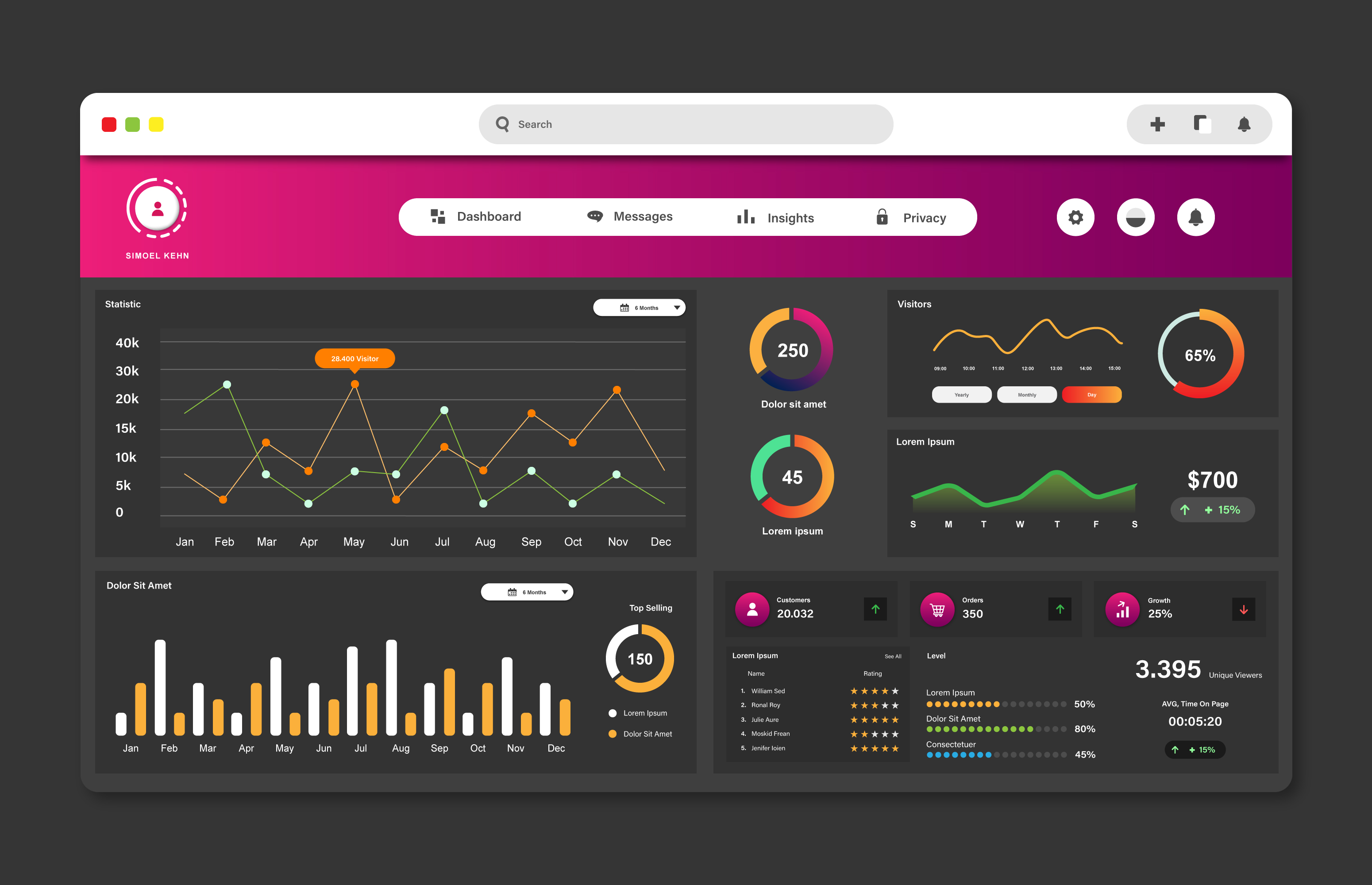
If you’re building a product and need to understand how users behave, two names come up in every conversation: PostHog and Mixpanel. Both are product analytics platforms. Both offer funnels, retention analysis, and cohort tracking. But they’re built on fundamentally different philosophies.
PostHog is open-source, developer-first, and bundles a dozen tools into one platform. Mixpanel is proprietary, polished, and laser-focused on behavioral analytics. I’ve set up both for clients — here’s an honest comparison to help you decide which fits your team.
Quick Comparison Table
| Feature | PostHog | Mixpanel |
|---|---|---|
| Open source | Yes (MIT license) | No |
| Self-hosting | Yes (Docker/Kubernetes) | No |
| Free tier | 1M events/month | 20M events/month |
| Product analytics | Funnels, retention, paths, cohorts | Funnels, retention, flows, cohorts |
| Session replay | Built-in (5K/month free) | Via third-party integration |
| Feature flags | Built-in | No |
| A/B testing | Built-in | No (requires third-party) |
| Surveys | Built-in | No |
| Error tracking | Built-in | No |
| EU data hosting | Yes (EU Cloud or self-host) | Yes (EU residency option) |
| Cookieless mode | Yes | No native option |
| Best for | Engineering-led teams, startups | Marketing/product teams, enterprises |
PostHog: The All-in-One Developer Platform
PostHog started as an open-source alternative to Mixpanel and Amplitude, but it’s grown into something much broader. Today it bundles:
- Product analytics (funnels, retention, user paths)
- Session replay
- Feature flags and experiments
- Surveys
- Error tracking
- Web analytics
- Data warehouse connectors
The pitch: replace your entire analytics and experimentation stack with one tool.
PostHog Strengths
Open source and self-hostable. You can run PostHog on your own infrastructure. For regulated industries (healthcare, fintech), this is often a hard requirement. The code is on GitHub — you can audit exactly what it does with your data.
Developer experience. PostHog has an API-first approach, SQL access to your data, and an MCP server for AI coding tools. If your team lives in code, PostHog feels native. I’ve watched engineers go from zero to custom dashboards in under an hour.
Privacy features. Cookieless tracking mode, EU hosting, and the ability to self-host make PostHog genuinely viable for GDPR compliance without consent banners.
Pricing transparency. Usage-based with a generous free tier (1M events/month). Anonymous events cost up to 80% less than identified events — a huge advantage for privacy-conscious setups where you’re not identifying users.
PostHog Weaknesses
UI complexity. With so many features, the interface can feel overwhelming. Non-technical team members often struggle to find what they need without engineering help.
Self-hosting overhead. Running PostHog yourself means managing ClickHouse, Kafka, PostgreSQL, and Redis. It’s a serious infrastructure commitment. Most teams should start with PostHog Cloud.
Jack of all trades. Each individual feature is good but not best-in-class. Session replay isn’t as polished as FullStory. Feature flags aren’t as robust as LaunchDarkly. You trade depth for breadth.
Mixpanel: The Polished Analytics Specialist

Mixpanel has been in the product analytics game since 2009. It does one thing — behavioral analytics — and does it exceptionally well.
Mixpanel Strengths
Best-in-class analytics UI. Mixpanel’s interface is genuinely enjoyable to use. Building funnels, creating cohorts, and exploring user flows feels intuitive even for non-technical team members. When I onboard marketing teams onto Mixpanel, they’re self-sufficient within a day.
Battle-tested at scale. Mixpanel handles billions of events for companies like Uber, Docusign, and Yelp. If you’re processing 100M+ events/month, Mixpanel’s infrastructure won’t blink.
Warehouse-native mode. Mixpanel can read directly from your data warehouse (Snowflake, BigQuery) instead of ingesting events. This means your data stays in one place and Mixpanel becomes a query layer on top.
Generous free tier. 20M events/month is the largest free tier in the product analytics space. For many startups, this is enough to never pay.
Mixpanel Weaknesses
No self-hosting. Your data lives on Mixpanel’s infrastructure. Period. For companies with strict data residency requirements, this can be a dealbreaker — though Mixpanel does offer EU data residency.
No built-in experimentation. Need A/B testing or feature flags? You’ll need a separate tool (LaunchDarkly, Optimizely, or… PostHog). This adds cost and integration complexity.
No session replay. Understanding what users do is Mixpanel’s strength, but understanding why often requires seeing the actual session. You’ll need FullStory, Hotjar, or similar.
Privacy limitations. No cookieless tracking mode. No self-hosting option. GDPR compliance requires a cookie consent banner. For privacy-first setups, Mixpanel requires more work than PostHog.
Head-to-Head: Privacy and Compliance
This is where the two platforms diverge sharply:
| Privacy Feature | PostHog | Mixpanel |
|---|---|---|
| Cookieless tracking | Yes — built-in toggle | No native support |
| Self-hosting | Yes — full data ownership | No |
| EU data residency | EU Cloud (Frankfurt) | EU residency option |
| Consent banner needed | No (in cookieless mode) | Yes |
| Data deletion API | Yes | Yes |
| Open-source audit | Full code available | Not possible |
Winner: PostHog, clearly. If privacy is a primary concern — and for readers of this site, it usually is — PostHog gives you options that Mixpanel simply doesn’t offer.
When a fintech client asked me to set up product analytics that could pass a SOC 2 audit without third-party data sharing, PostHog self-hosted was the only product analytics platform that qualified. Mixpanel wasn’t even in the running.
Head-to-Head: Pricing

| Volume | PostHog Cost | Mixpanel Cost |
|---|---|---|
| Under 1M events/mo | Free | Free |
| 5M events/mo | ~$50-100/mo | Free (under 20M) |
| 20M events/mo | ~$200-400/mo | Free (at limit) |
| 50M events/mo | ~$500-800/mo | Custom pricing |
| Self-hosted | Free (+ server costs) | Not available |
For pure product analytics, Mixpanel’s free tier is hard to beat — 20M events covers most startups. But if you’d also be paying for session replay, feature flags, and A/B testing separately, PostHog’s bundled pricing often works out cheaper.
A SaaS client I worked with was paying $0 for Mixpanel (free tier), $99/month for LaunchDarkly (feature flags), and $49/month for Hotjar (now Contentsquare; $39 if billed annually) (session replay). Switching to PostHog consolidated everything at $75/month total. The savings aren’t always from the analytics themselves — it’s from eliminating the surrounding tools.
Which One Should You Choose?

Choose PostHog if:
- Your team is engineering-led and comfortable with technical tools
- You need feature flags, A/B testing, or session replay alongside analytics
- Privacy and data ownership are hard requirements (GDPR, SOC 2, HIPAA)
- You want to self-host for full data control
- You prefer open-source tools you can audit and extend
Choose Mixpanel if:
- Your product and marketing teams need self-serve analytics
- You prioritize UI polish and ease of use over feature breadth
- You’re already warehouse-native and want a query layer on top
- You process 5-20M events/month and want to stay on a free tier
- You don’t need feature flags or session replay from the same tool
My recommendation for most teams: start with PostHog. The free tier is generous enough to evaluate properly, you get feature flags and experiments from day one, and the privacy features give you flexibility as regulations evolve. If your team finds the UI too complex after a real trial, Mixpanel is always there as a more focused alternative.
FAQ
Can PostHog fully replace Mixpanel for product analytics?
For core analytics features — funnels, retention, cohorts, user paths — yes. PostHog covers everything Mixpanel offers. Where Mixpanel edges ahead is UI polish and ease of use for non-technical users. If your analytics consumers are primarily engineers, PostHog is a full replacement. If marketing runs most analyses, evaluate whether they find PostHog’s interface manageable.
Is PostHog’s self-hosted version production-ready?
Yes, but it requires serious infrastructure. PostHog uses ClickHouse, Kafka, PostgreSQL, and Redis under the hood. For teams under 10M events/month, PostHog Cloud is usually the better choice. Self-host when you have a DevOps team and a genuine data residency requirement — not just to save money.
Which tool has better data accuracy?
PostHog’s cookieless mode captures more visitors because it doesn’t require a consent banner. Mixpanel requires cookies and consent, meaning you lose data from users who reject tracking. In my experience, PostHog in cookieless mode captures 15-25% more events than Mixpanel on the same site.
Can I migrate from Mixpanel to PostHog (or vice versa)?
PostHog has a built-in Mixpanel importer that transfers your historical event data. Going the other direction is harder — you’d need to export from PostHog’s API and import via Mixpanel’s ingestion API. If you’re unsure, start with PostHog since migrating away from open-source tools is generally easier.
Both PostHog and Mixpanel are excellent product analytics platforms — the right choice depends on your team’s technical profile and privacy requirements. For a broader view of privacy-first options, check our best GA4 alternatives or see how PostHog fits into a GDPR-compliant startup stack.